
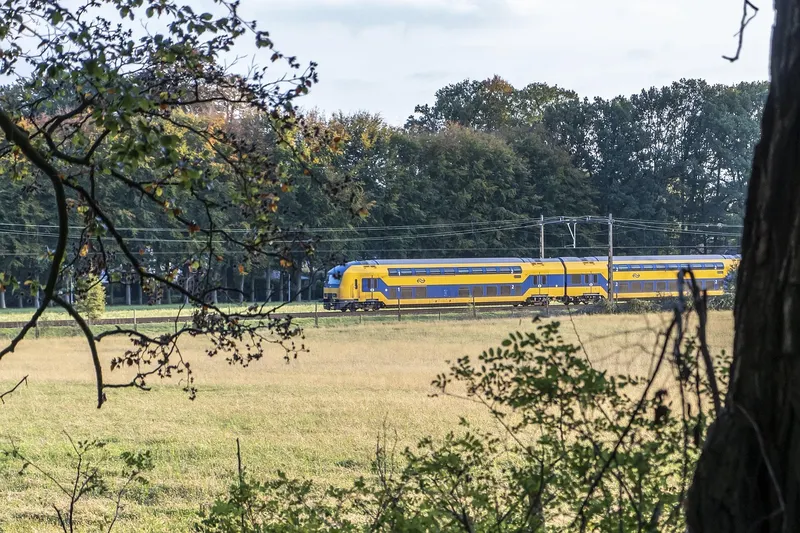
The Dutch rail system explained
The national operator Nederlandse Spoorwegen (NS) manages most of the network, with punctual service and easy transfers. There are three main train types:
- Sprinter trains make short, local journeys with many stops, perfect for visiting smaller towns like Gouda or Leiden.
- Intercity trains connect the major cities such as Amsterdam, Rotterdam, Utrecht, Eindhoven and Groningen, often several times per hour.
- International and high-speed trains, including Eurostar, ICE International, and Intercity Brussels, link the Netherlands to major European capitals.
Ordinary domestic NS trains do not use seat reservations. Eurostar requires a reservation; requirements on other international trains depend on the service and travel date. Check these when booking.
Tickets and how to travel like a local
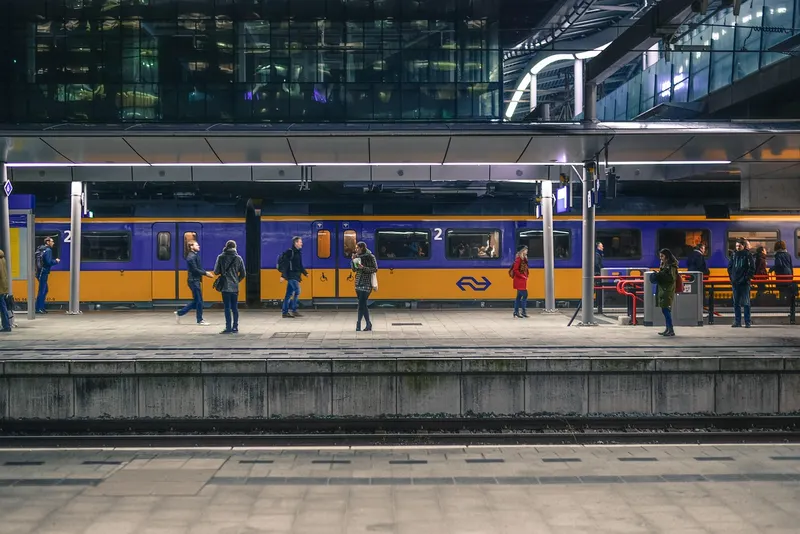
Buy a ticket through NS or use a supported contactless card or phone with OVpay. Check in and out with the same card or device; each traveller needs their own. On NS, ordinary bank-card travel is second class at the full fare. Compare any travel pass with the journeys you actually plan to make.
One-day public transport across the Netherlands. Check the peak/off-peak conditions and train supplements with NS.
Check tickets on the official websiteDomestic fares are based on distance and don’t change with demand, so there’s no need to book early. International tickets, however, are dynamic: prices depend on when you book, the level of flexibility, and how busy the train is.
Domestic travel on ICE trains can require a supplement, including the routes from Amsterdam towards Arnhem and Hengelo. Other fast services have their own rules. Check the supplement requirements for your train before boarding.
For international journeys, NS International is the best place to plan and book.
Scenic routes and international connections
The Netherlands is compact, but its scenery unfolds beautifully from the train window. You’ll glide through meadows, polders and windmills, cross calm waterways, and pass futuristic cities within minutes.
Eurostar connects the Netherlands with Belgium, France and the UK. Check the timetable for your travel date rather than relying on a fixed number of daily departures.
Other popular routes include:
- Amsterdam – Brussels – Paris: high-speed travel in under four hours.
- Amsterdam – Cologne – Frankfurt: direct ICE service with smooth comfort.
- Amsterdam – Antwerp: a quick and easy 90-minute trip with several daily departures.
You can book them via NS international.
These connections make the Netherlands the perfect starting point for a European train journey.
Comfort and etiquette on board
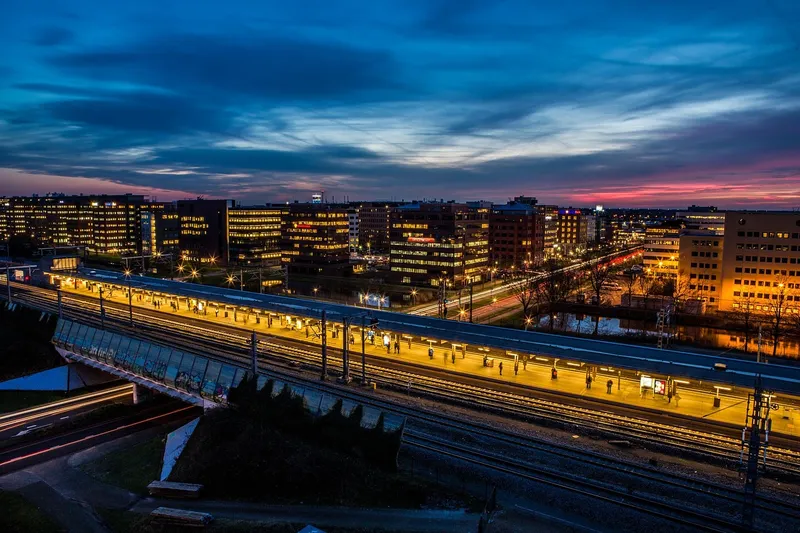
Dutch trains are modern, safe, (always relatively for me) clean and calm. Travellers generally keep to themselves, making for a peaceful atmosphere. Trains depart on time, so arrive a few minutes early to find your platform and carriage.
Most trains offer free Wi-Fi, power outlets, and clean restrooms. Luggage racks are located above seats and at the end of each carriage. Bicycles are welcome outside rush hours which run from Monday to Friday, from 6:30 to 9:00 AM and 4:00 to 6:30 PM with a bike day ticket.
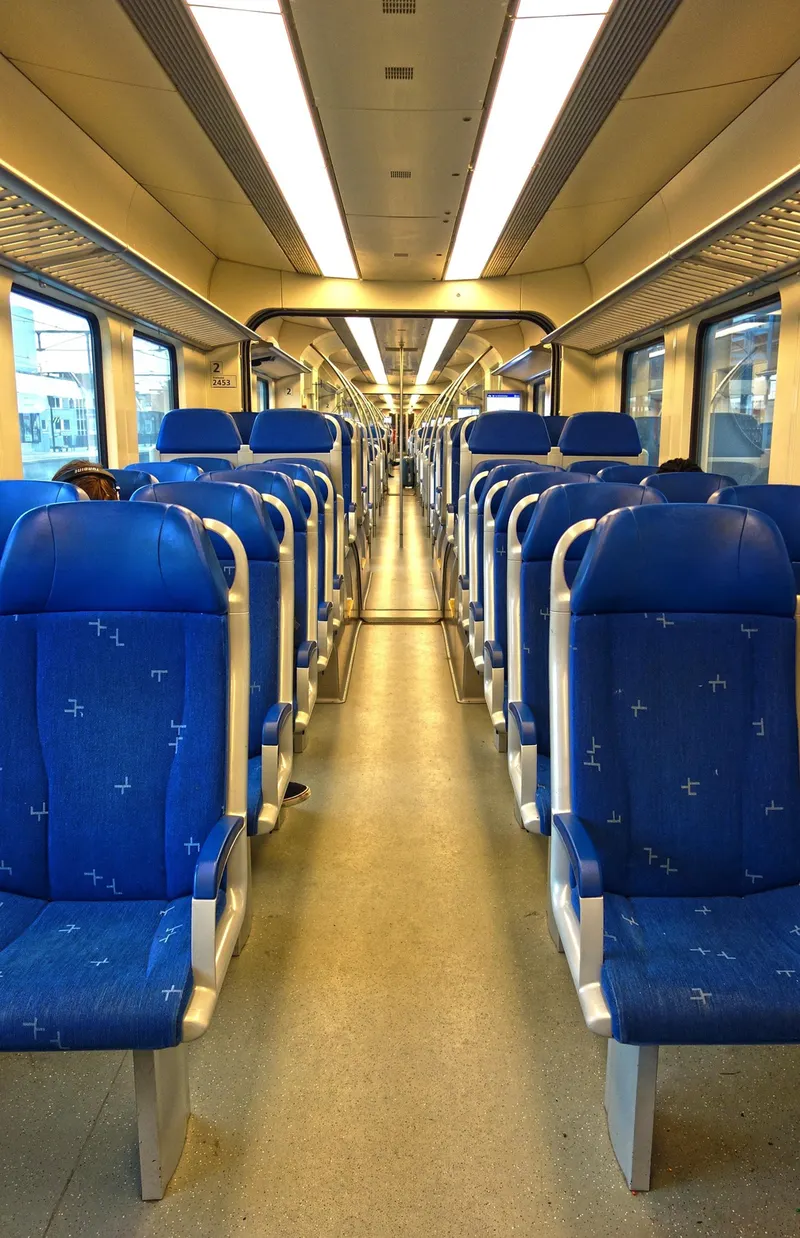
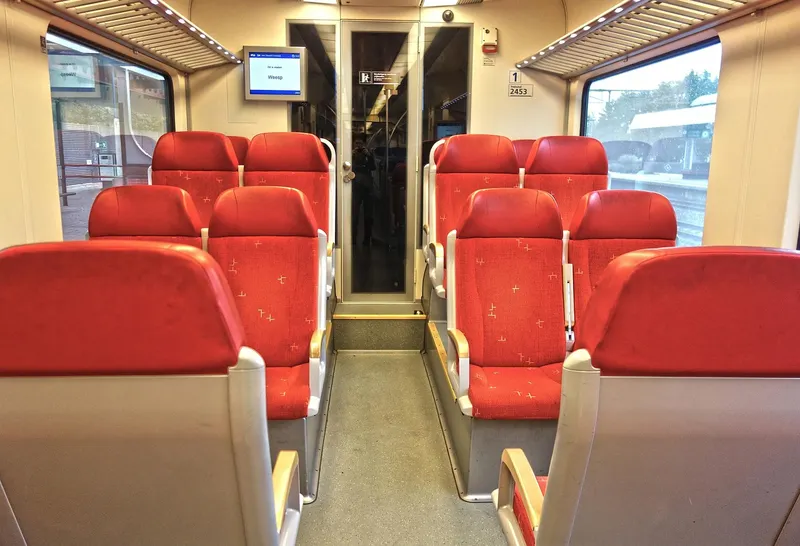
There are two classes of service: second class is comfortable and affordable, while first class (business) offers extra space and a quieter environment. Below are two pictures of the different classes.
Where to stay for a trip by train
Compare city accommodation and use the map to check the walk or public-transport connection to the station. These links show city-wide results, not only station hotels.
Why tourists love Dutch train travel
Few countries are easier to explore by train than the Netherlands. You can have breakfast in Amsterdam, lunch in Utrecht, and dinner by the sea in The Hague, all within a single day. Frequent connections and fixed domestic pricing make spontaneous trips easy and affordable.
For the train journey between Schiphol Airport and Amsterdam Centraal. Check the direction and ticket option before booking.
View ticket on GetYourGuideFor city-to-city journeys, taking the train avoids driving and parking in busy centres. Stations often connect directly with local buses, trams or metros.
Stay updated and my final advice
Before travelling, check the NS app/website for real-time updates in English about track works, delays or temporary route changes, especially around Amsterdam and Utrecht as these are the most congested parts in regards to train travelling. I’m commuting almost daily from The Hague to Amsterdam and always check the app first before leaving.
Allow time for transfers and check the live departure board before heading to your platform.
Two inspiring itineraries by train
Created two simple routes by train that I would take myself or recommend any tourist if they are planning to use the train. It’s perfect for short trips in my opinion.
Classic highlights route (3 days)
We use Amsterdam as our starting point
Day 1 – Amsterdam & Haarlem
Start in Amsterdam, wander along its canals or visit the top things to do, then take a 15-minute train to Haarlem for dinner in its historic old town.
Day 2 – The Hague & Delft
Take an Intercity train to The Hague (±40 min) for art at the Mauritshuis, then continue to Delft (±15 min) for royal history and blue pottery.
Day 3 – Rotterdam & Utrecht
Ride to Rotterdam (±15 min) for modern architecture and lunch at the Markthal, then finish in Utrecht (±40 min) with its iconic Dom Tower before returning easily to Amsterdam in 30 minutes.
Cross-border discovery route (5 days)
We start in Amsterdam but will travel around the country and visit Belgium for a few days.
Day 1 – Amsterdam
Arrive and explore the canals, museums and nightlife.
Day 2 – Utrecht & Eindhoven
Take the train to Utrecht for its beautiful canals, then head to Eindhoven for a taste of Dutch design.
Day 3 – Maastricht
A two-hour Intercity ride brings you to the country’s southern gem Maastricht, filled with Roman ruins and boutique cafés.
Day 4 – Brussels
Take the Intercity Brussels train for waffles, chocolate and culture in Belgium’s capital.
Day 5 – Antwerp or Ghent
Before returning, stop in Antwerp’s cathedral district or the canals of Ghent, then take the evening high-speed train back to Amsterdam.
Frequently asked questions
Can I pay with my credit card at the station?
Yes. Ticket machines accept major international cards, and you can also travel contactlessly with a debit or credit card.
Do I need a seat reservation?
Not on ordinary domestic NS trains. Eurostar requires a reservation. For other international services, check the rules for your route and travel date with NS International.
Where can I check international train routes?
Check NS International or Eurostar for the routes and departures available on your travel date. Timetables can change during engineering works.
Are train fares fixed?
Domestic fares are fixed by distance. International tickets vary depending on booking time and flexibility.
Where can I check for disruptions or works?
Use the NS app or website for live updates in English, including service changes and construction notices.