
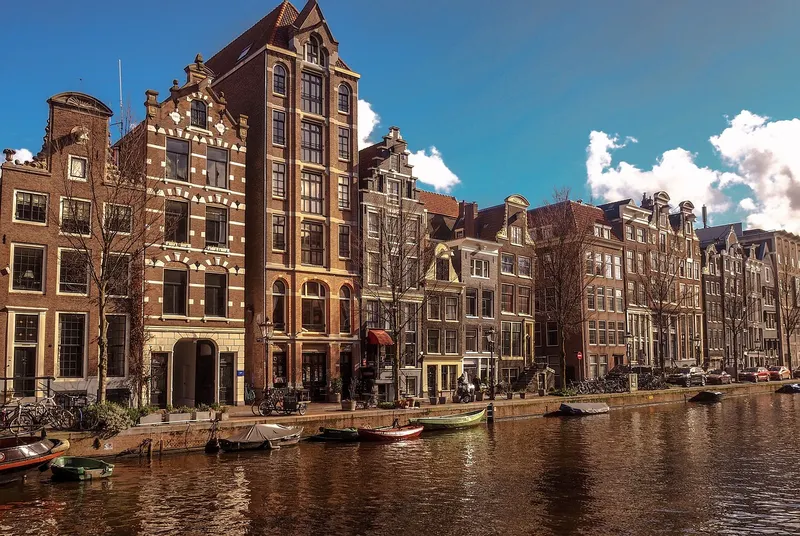
From trading towns to a metropolitan web
The roots of the Randstad trace back to the Middle Ages, when cities like Amsterdam and Rotterdam grew into powerful trade hubs during the Dutch Golden Age. Over time, infrastructure, commerce, and population began to concentrate in the western part of the country.
The term “Randstad” was first coined in 1938 by KLM founder Albert Plesman during a flight over the Netherlands. Observing a ring of cities from the air, he predicted this arc-shaped urban cluster would become increasingly significant. He was right. In the decades after World War II, the Randstad transformed into an integrated economic and social region, albeit one without formal political unity.
The geography of the Randstad
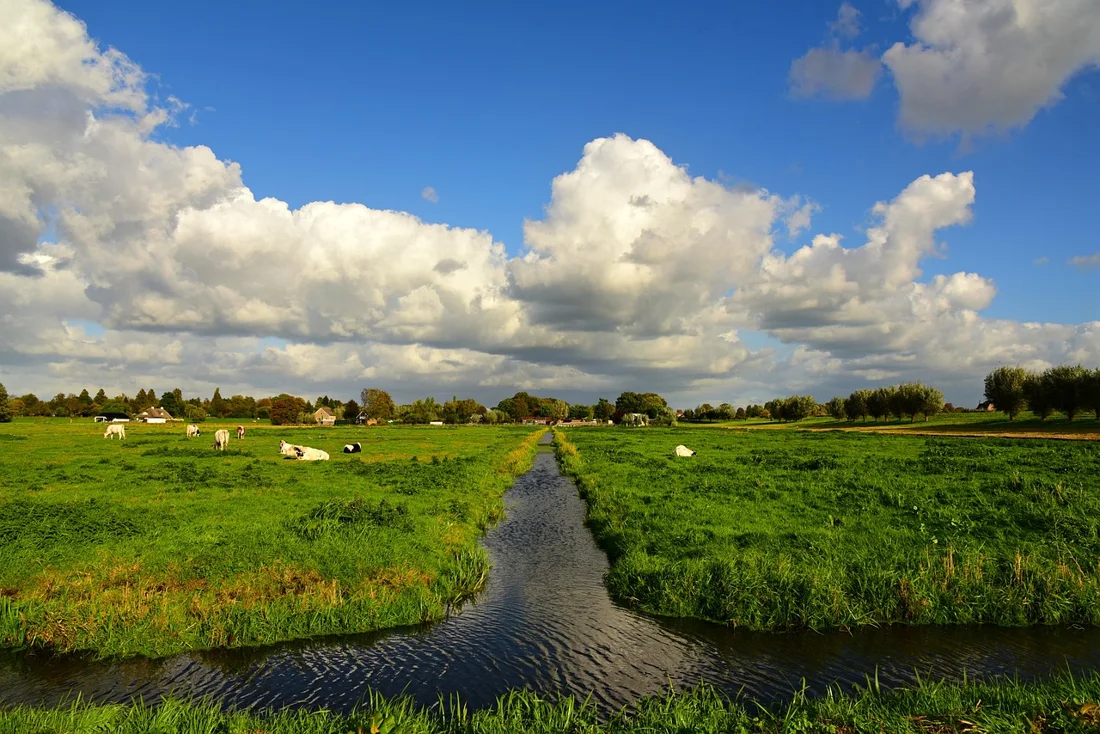
The Randstad is often described as a ring with the “Groene Hart” (Green Heart) in its center a sparsely populated zone of lakes, meadows, and villages meant to preserve nature and prevent full urban sprawl. This unique spatial arrangement makes the Randstad both densely urban and surprisingly green.
The cities of the Randstad are connected by an exceptional network of highways, railways, and waterways. Trains between the main cities run every few minutes, and major airports and seaports Schiphol and the Port of Rotterdam anchor the region in global trade routes.
You will also find most of the top things to do in The Netherlands here and the best tulip fields and old windmills. For most of the National Parks you need to move away from the Randstad a bit.
Explore two Randstad cities
Amsterdam canal cruise
A 75-minute city canal cruise. Review departure point and available options before booking.
Amsterdam canal cruise on GetYourGuideRotterdam architecture walking tour
A guided walk through Rotterdam’s architecture. Check the meeting point and available tour language.
Rotterdam architecture walking tour on GetYourGuideDemographics: diversity as a defining strength
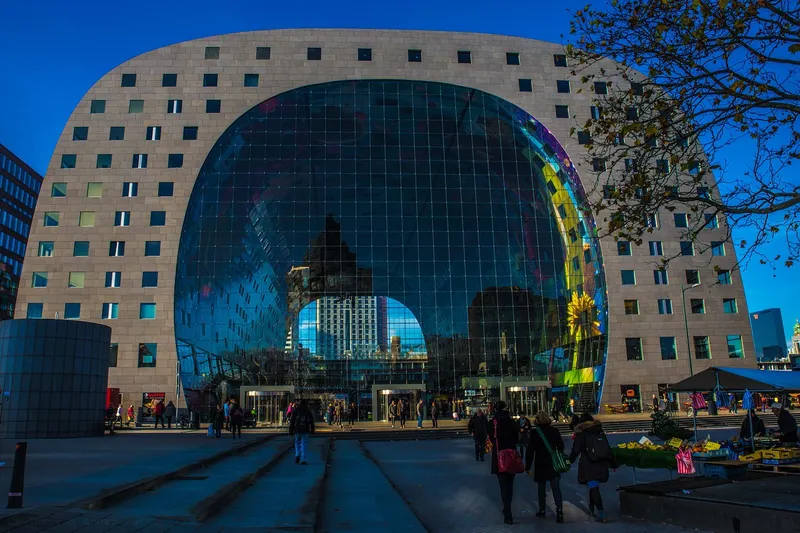
The Randstad is one of the most diverse regions in Europe. Its population is a rich mosaic of cultures, ages, and backgrounds. From the historic canal districts of Amsterdam to the multicultural neighborhoods of Rotterdam, the Randstad reflects centuries of immigration, trade, and openness.
Over one third of the population in cities like Amsterdam and Rotterdam has a migration background originating from Suriname, Turkey, Morocco, Indonesia, the Dutch Caribbean, and increasingly from EU countries like Poland, Bulgaria, and Germany. This diversity fuels the region’s creativity, international outlook, and entrepreneurial spirit.
At the same time, the population is aging, particularly in suburban and rural areas on the outskirts of the Randstad. Balancing the needs of younger, urban generations with those of older, more rural populations is an ongoing challenge for policy makers.
The Randstad also faces demographic pressure from population growth. Estimates suggest the Dutch population could grow to nearly 20 million by 2050, with most of that growth centered in the Randstad. This calls for sustainable urban expansion, with smart housing, green infrastructure, and inclusive social policy.
Governance: fragmented region, united ambitions
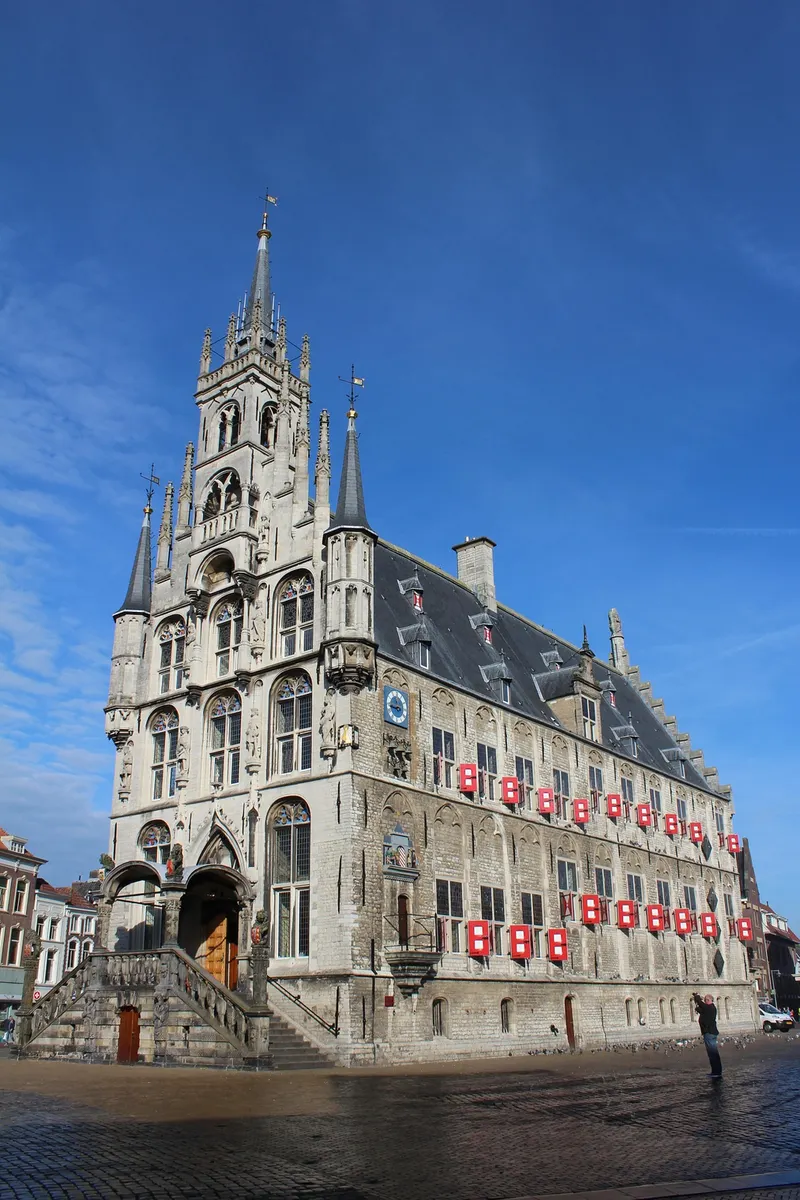
One of the unique aspects of the Randstad is that it’s not a formal administrative entity. Unlike cities like London or Paris, the Randstad has no central authority or elected mayor. Instead, it is a patchwork of provinces (Noord-Holland, Zuid-Holland, Utrecht, Flevoland), municipalities, water boards, and national ministries.
This fragmentation creates both friction and flexibility. On the one hand, decision-making can be slow, and coordination between cities can be complex. On the other hand, local governments retain the freedom to innovate and respond to their unique urban or rural contexts.
To address shared challenges such as housing, mobility, climate adaptation, and economic development various forms of regional cooperation have emerged. Platforms like the Metropoolregio Amsterdam (MRA), the Rotterdam–The Hague Metropolitan Area (MRDH), and the U10 (Utrecht region) try to align policies and investments across city borders.
Where to stay in the Randstad
Compare accommodation in Amsterdam, Rotterdam and Utrecht. Check your onward journeys before booking a base for several cities.
Economic powerhouse of the Netherlands
The Randstad is the economic heart of the Netherlands. It houses headquarters of global corporations, international courts, financial institutions, tech companies, logistics centers, and creative industries. Each major city plays its own role:
- Amsterdam: financial services, creative industries, tourism, and international trade.
- Rotterdam: Europe’s largest port, logistics, and maritime innovation.
- The Hague: seat of government, international law, and diplomacy.
- Utrecht: mobility hub and center for education, health sciences, and IT.
The interconnectedness of these cities allows for a flexible labor market, shared knowledge clusters, and economies of scale while the proximity of rural areas ensures fresh food, recreation, and local sustainability.
Top 20 cities in the Randstad
- Amsterdam – Capital of the Netherlands, financial center, and global tourism hotspot.
- Rotterdam – Europe’s largest port, known for modern architecture and logistics.
- The Hague (Den Haag) – Political capital, home to the Dutch government and international courts.
- Utrecht – Historic university city and major rail hub with a growing tech sector.
- Haarlem – Capital of North Holland, known for its historic city center and creative industries.
- Amersfoort – Fast-growing city with a strong residential appeal and strategic location.
- Almere – New town built on reclaimed land (Flevoland), rapidly expanding.
- Delft – University city famous for TU Delft, innovation, and historic charm.
- Leiden – Oldest university city in the Netherlands, with a strong scientific and medical base.
- Zoetermeer – Originally a growth city for The Hague, now a major residential and business hub.
- Hilversum – Dutch media capital, located in the Gooi region.
- Zaanstad (incl. Zaandam) – Industrial heritage area just northwest of Amsterdam.
- Schiedam – Historic gin capital with deep ties to the Port of Rotterdam.
- Alphen aan den Rijn – Centrally located with strong logistics and light industry.
- Hoofddorp – Next to Schiphol Airport, part of the fast-developing Haarlemmermeer.
- Nieuwegein – Modern satellite city of Utrecht, with a strong business park profile.
- Gouda – Famous for cheese, but also a regional economic and administrative hub.
- Vlaardingen – Industrial and port-related economy, closely tied to Rotterdam.
- Purmerend – Suburban commuter city for Amsterdam, rapidly growing.
- Rijswijk – Dense urban center between The Hague, Voorbug, Leidschendam and Delft, with tech campuses and international organizations.
Infrastructure and mobility in the Randstad
The Randstad is famous for its advanced infrastructure. High-speed trains (Intercity and Intercity Direct), bike highways, and efficient public transport make commuting relatively easy despite the dense population. The Dutch NS rail system is one of the busiest in the world per capita, and Schiphol Airport is a global aviation hub.
One-day public transport across the Netherlands. Check the peak/off-peak conditions and train supplements with NS.
Check tickets on the official websiteHowever, the region faces serious mobility challenges. Congested roads, crowded trains during rush hours (less and less due to WFH policies), and the pressure of urban expansion test the limits of existing infrastructure. Government projects such as the North-South metro line in Amsterdam and new rail expansions aim to alleviate the pressure, but require massive investment and long-term vision.
Urban challenges: housing, sustainability, and cohesion
The popularity and economic strength of the Randstad come at a cost. One of the most pressing issues is the housing shortage. Skyrocketing prices, limited space, and strict zoning laws make it hard for young people and middle-income families to find affordable homes.
Environmental concerns are also growing. Air quality, CO₂ emissions, noise pollution, and the threat of sea-level rise all demand urgent and coordinated responses. The Randstad needs to become not only smarter, but greener through innovations in energy, architecture, circular economy, and water management.
Social cohesion is another challenge. As the Randstad grows, income inequality, segregation, and access to services become more polarized between neighborhoods. Bridging these gaps is essential to ensure an inclusive, resilient region.
The future of the Randstad: polycentric and sustainable?
What makes the Randstad truly remarkable is its potential. It is a laboratory for future urban living a place where the interplay of technology, governance, and nature can be tested at scale.
There is a growing call to better integrate the Randstad into a single polycentric metropolis, with shared urban planning and regional collaboration. The idea is not to merge cities into one mega-city, but to reinforce their complementarity, while preserving the Green Heart as a collective lung and identity anchor.
Efforts such as the “NOVI” (National Strategy on Spatial Planning and the Environment) and regional climate agreements show the Dutch commitment to balancing density with quality of life. Innovation districts, sustainable mobility hubs, and circular construction projects already hint at what a future Randstad might look like.