
Our ultimate Dutch food guide
As a food lover myself I created this list with great care. Some dishes might not be in the top rankings of the Dutch cuisine but they are still worth a try. My favorite Dutch food is bitterballen combined with a beer in the afternoon sun, hache and snert in the cold winter and a patatje oorlog when I have a hangover. Also loving a dropje! What are your favorites? Plus when you are staying in Amsterdam the following tours are a great way to experience some of the Dutch flavours;
Browse the food walks offered by Amsterdam Food Tours and choose the itinerary that suits you.
Browse food walks1. Stroopwafel
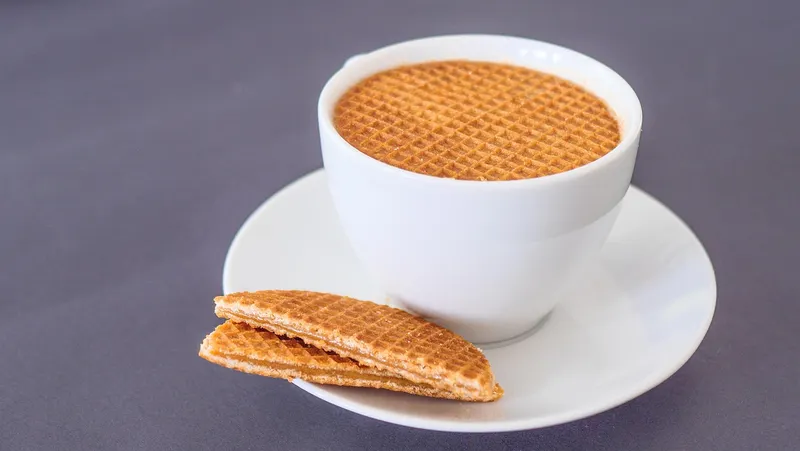
Imagine biting into a warm, gooey delight a stroopwafel. This iconic Dutch treat consists of two thin, crisp waffle layers sandwiched together by a luscious caramel syrup. Originating from the city of Gouda, stroopwafels were first crafted in the 19th century by resourceful bakers using leftover crumbs and syrup. Today, they’re a beloved snack, perfect with a cup of coffee or tea. For an authentic experience, place the stroopwafel over your hot beverage for a minute, allowing the caramel to soften. Still my go to cookie after eating so many.
2. Bitterballen
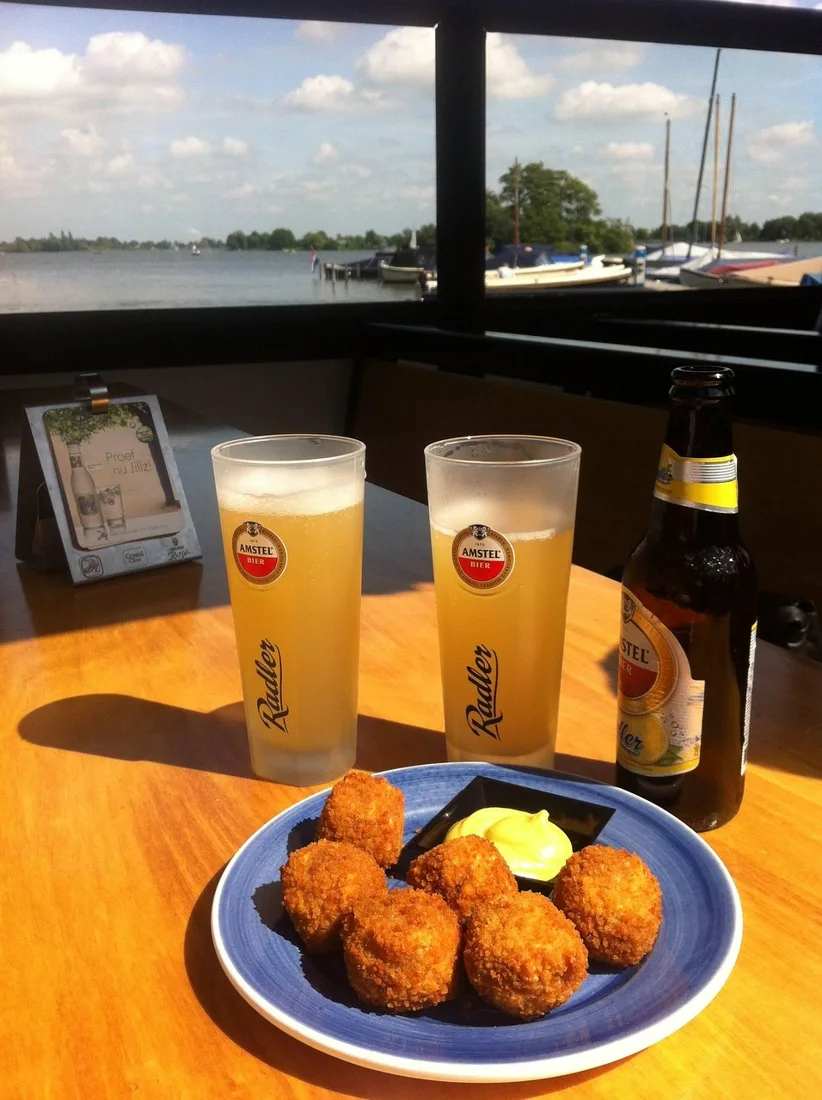
Crispy on the outside and creamy on the inside, bitterballen are the ultimate Dutch pub snack. These deep-fried, breadcrumb-coated balls are filled with a rich ragout of beef or veal, thickened with roux and beef broth, and seasoned with herbs. Traditionally served with mustard for dipping, they’re a must-try accompaniment to a cold Dutch beer. Their name, “bitterballen,” harks back to the Dutch word for bitters, as they were once commonly served with bitters, a type of alcoholic beverage. I like them with a cold beer or soda. Watch out that you don’t burn your lips, they are extremely hot inside!
3. Poffertjes
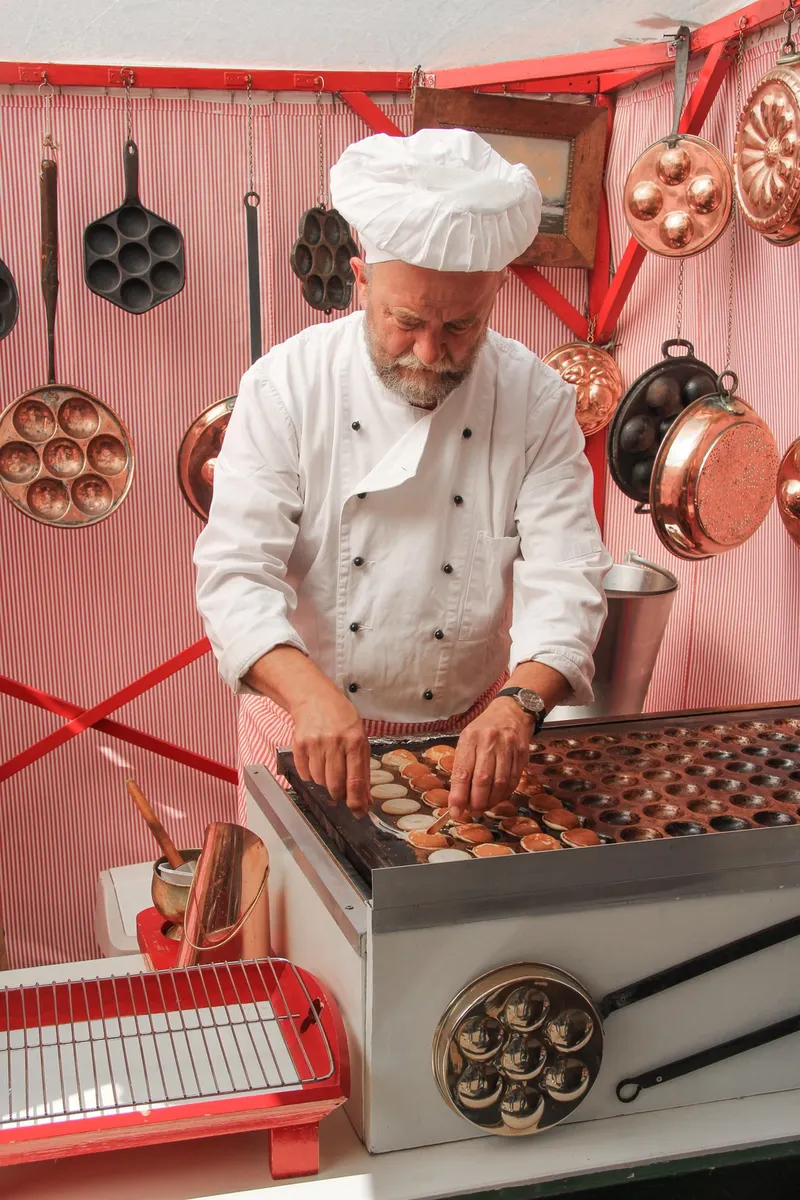
Poffertjes are fluffy, coin-sized pancakes that melt in your mouth. Made with yeast and buckwheat flour, these mini pancakes have a light and airy texture. They’re typically served warm, generously dusted with powdered sugar, and topped with a pat of melting butter. During winter months, you’ll find poffertjes stands at Dutch street markets and festivals, where you can watch them being prepared fresh on a specialized cast-iron pan.
4. Hollandse Nieuwe Haring
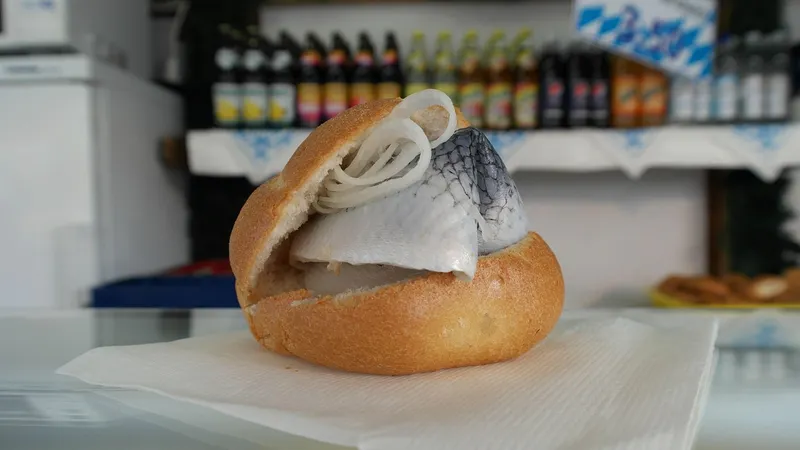
For the adventurous palate, Hollandse Nieuwe Haring offers a quintessential Dutch experience. This delicacy features raw herring, caught during the early summer when the fish are at their tender and mildest. The herring is traditionally cleaned, salted, and aged briefly to develop its flavor. To eat it the Dutch way, hold the fish by the tail, tilt your head back, and take a bite, often accompanied by chopped onions and pickles. The best place to eat them is during Vlaggetjesdag in Scheveningen, which is around end of May or beginning of June. Vlaggetjesdag celebrates the start of the haring season in The Netherlands.
5. Erwtensoep (Snert)
When winter chills set in, the Dutch warm up with a hearty bowl of erwtensoep, also known as snert. This thick pea soup is made from split peas, celery, leeks, carrots, and pork, simmered until it reaches a stew-like consistency. Traditionally, it’s so thick that a spoon can stand upright in it. Served with slices of rookworst (smoked sausage) and rye bread topped with katenspek (a type of Dutch bacon), snert is a comforting meal that has been enjoyed for centuries. When there is ice on the water and we are able to ice skate, this is our go to meal.
6. Stamppot
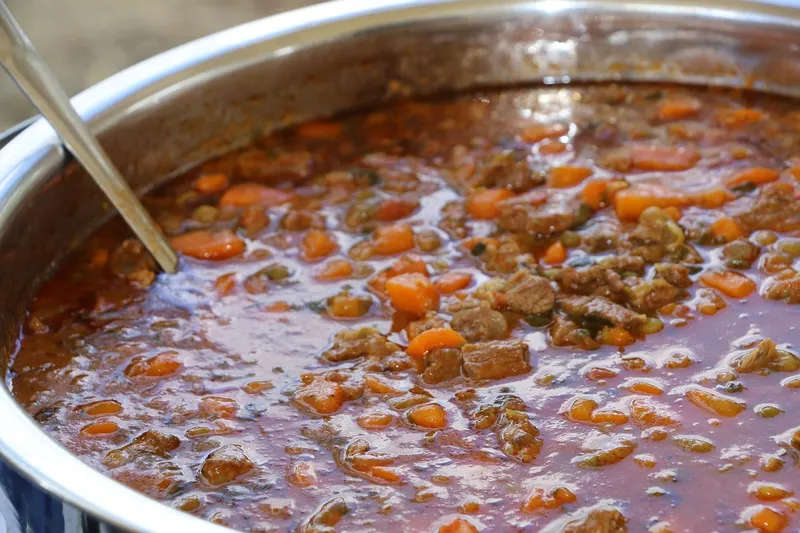
Stamppot is the epitome of Dutch comfort food. This traditional dish combines mashed potatoes with various vegetables such as kale (boerenkool), endive (andijvie), sauerkraut (zuurkool), or carrots and onions (hutspot). Often served with rookworst or a juicy meatball, stamppot is a warming meal perfect for cold days. Its origins date back to the 15th century, making it a longstanding staple in Dutch cuisine. Not the most appeasing looking meal, but it makes sure you can tackle every adventure during the day.
7. Kibbeling
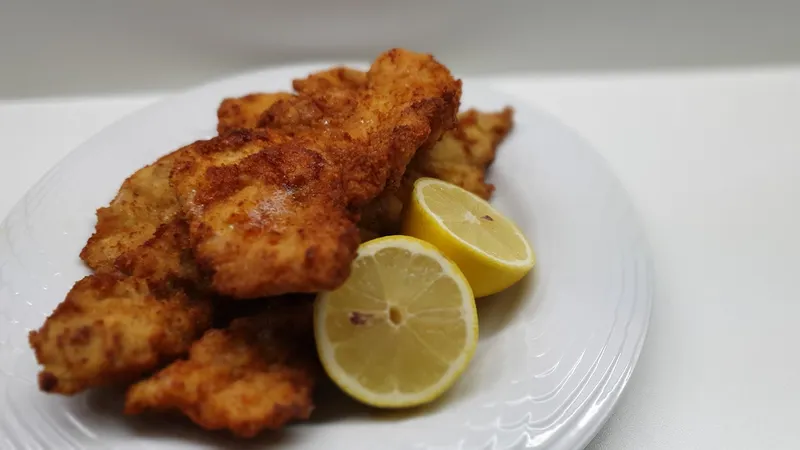
Kibbeling consists of bite-sized pieces of white fish, commonly cod, that are battered and deep-fried to golden perfection. This popular street food is typically served with a tangy garlic or tartar sauce called ravigotte/remouladesaus. Crispy on the outside and tender on the inside, kibbeling is a favorite among locals and visitors alike, especially when enjoyed fresh from a market stall. Best to eat this dish at places near the sea like Urk, Vlissingen, The Hague, Haarlem, Rotterdam or Middelburg for example. I personally really like it with a lemon on the side like you can see on the picture.
8. Oliebollen
Oliebollen, literally “oil balls,” are the Dutch answer to doughnuts. These deep-fried dough balls are traditionally filled with raisins or currants and dusted with powdered sugar. They’re especially popular during New Year’s Eve celebrations, with street vendors selling them throughout the winter season. The crispy exterior and soft, fluffy interior make them an irresistible treat.
9. Pannenkoeken
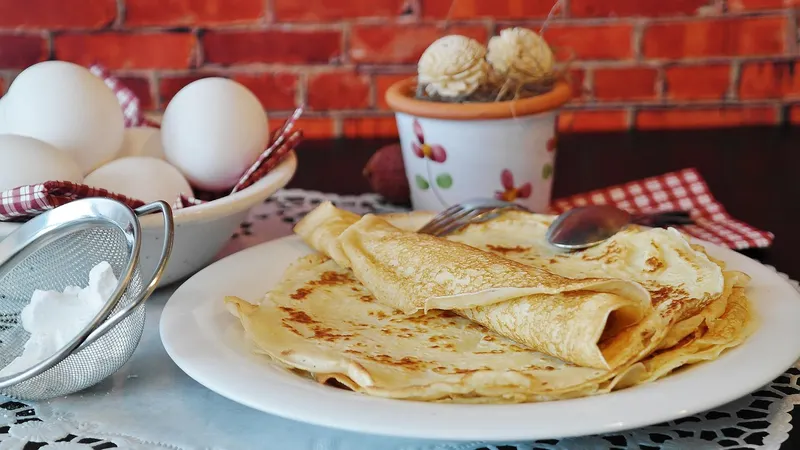
Dutch pannenkoeken are larger and thinner than American pancakes but thicker than crêpes. Made from a simple batter of flour, milk, and eggs, they can be served sweet or savory. Popular toppings include powdered sugar, syrup, apples, cheese, or bacon. Pannenkoeken are often enjoyed as a main course and are a staple in Dutch households and specialized pancake restaurants.
10. Appeltaart
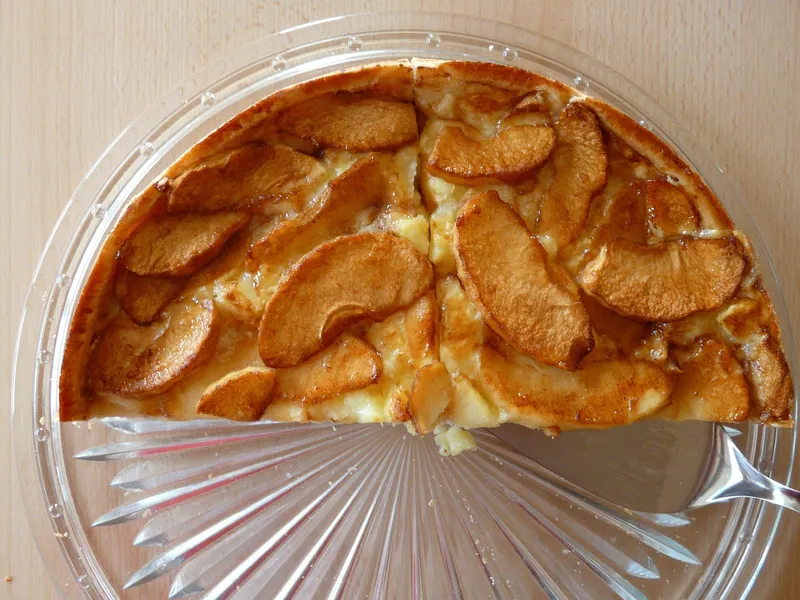
Dutch appeltaart is a deep-dish apple pie that stands out for its rich filling and buttery crust. Filled with slices of tart apples, cinnamon, sugar, and often raisins or nuts, it’s encased in a lattice-topped crust that adds a delightful crunch. Served with a dollop of whipped cream, a slice of appeltaart pairs perfectly with a cup of coffee, making it a favorite treat in Dutch cafés.
11. Gouda Cheese
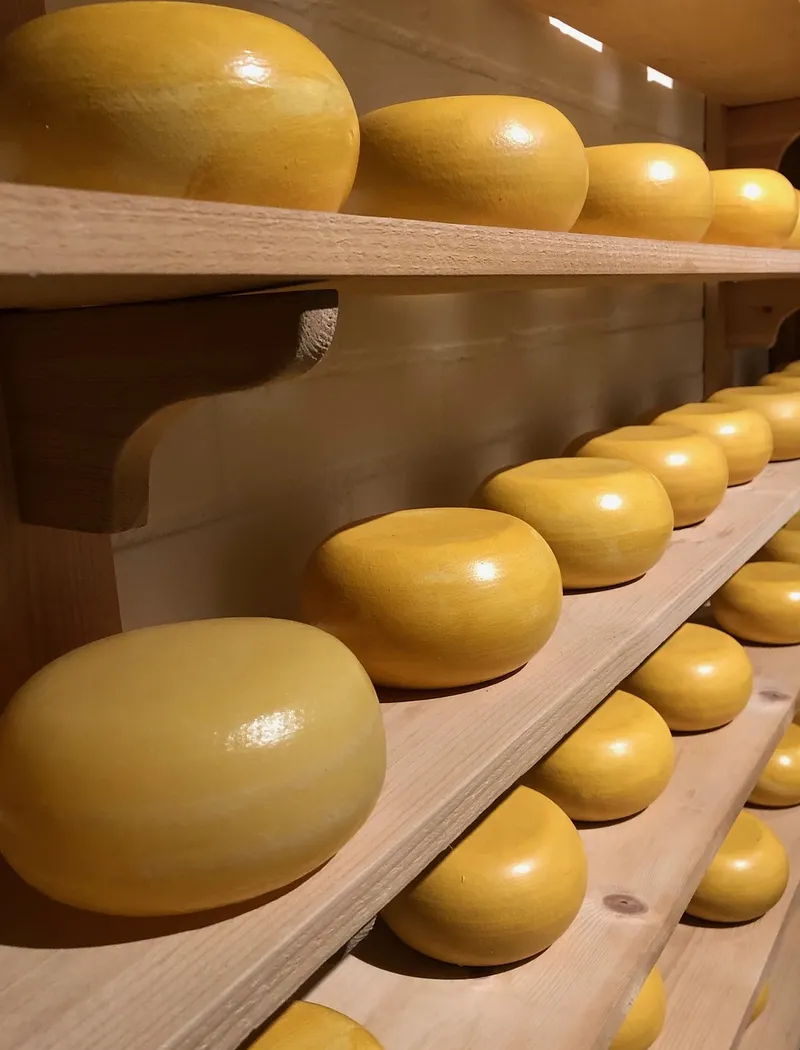
Gouda cheese is one of the Netherlands’ most famous exports. Named after the city of Gouda, this semi-hard cheese is known for its rich, creamy flavor that intensifies with age. Young Gouda is mild and smooth, while aged varieties develop a more robust and complex taste, often with hints of caramel. Enjoy it sliced on bread, cubed as a snack, or melted in various dishes. Other famous Dutch cheeses that I also like are Leerdammer or Old Amsterdam.
12. Hagelslag
A unique Dutch breakfast treat, hagelslag are chocolate sprinkles generously spread over buttered bread. While it might seem like a dessert to outsiders, in the Netherlands, it’s a common and beloved way to start the day. Available in various flavors, including milk, dark, and white chocolate, as well as fruit flavors, hagelslag showcases the Dutch love for chocolate.
13. Kroketten
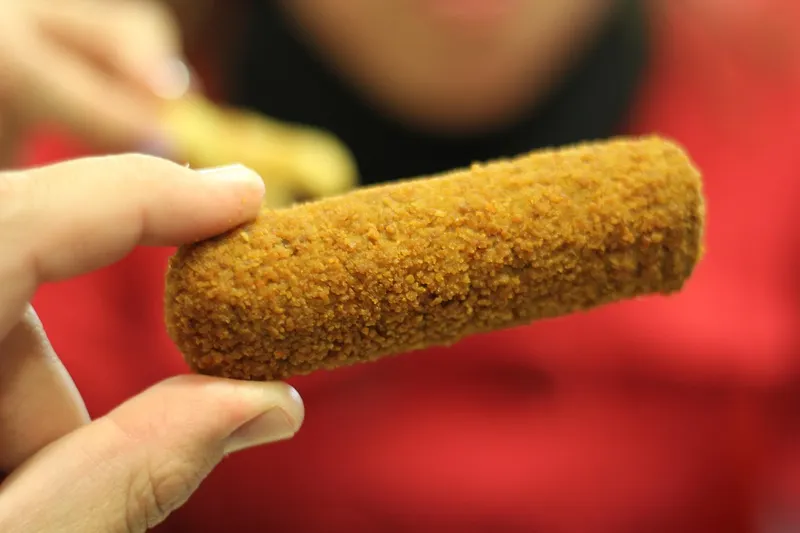
Kroketten are similar to bitterballen but are shaped like cylinders. These deep-fried snacks have a creamy ragout filling, often made from beef or veal, encased in a crunchy breadcrumb coating. They’re commonly enjoyed as a quick snack or served on a soft bread roll with mustard.
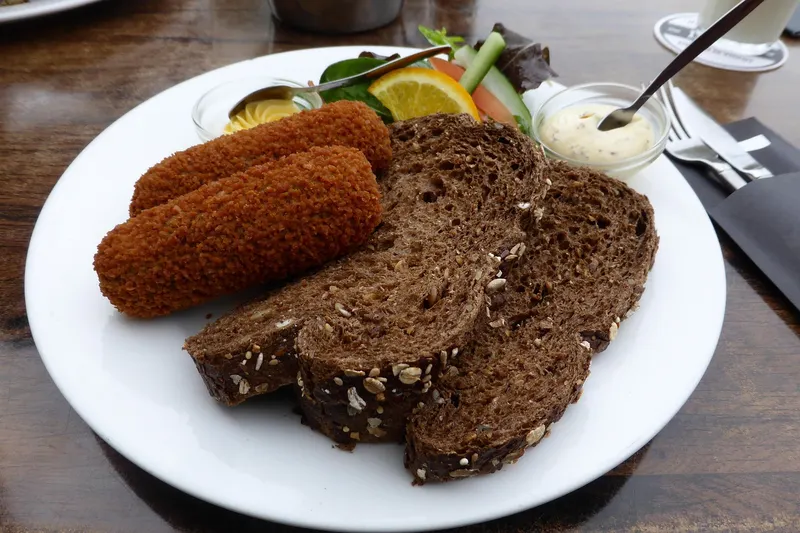
Kroketten are so popular that even fast-food chains in the Netherlands offer them. Be sure to get a broodje kroket at Febo (Dutch snackbar group) from the famous foodwall.
14. Hachee
Hachee is a traditional Dutch stew made from slow-cooked beef and onions, seasoned with bay leaves, cloves, and vinegar. The meat becomes tender, and the flavors meld into a rich, savory dish. Often served with boiled potatoes, red cabbage, or applesauce, hachee is a comforting meal that’s especially popular during the colder months.
15. Zuurkoolstamppot
A variation of stamppot, zuurkoolstamppot is made by mashing potatoes with sauerkraut, resulting in a tangy and hearty dish. It’s often served with rookworst (smoked sausage) and sometimes contains bacon for extra flavor. The combination of creamy potatoes and the slightly sour bite of sauerkraut makes it a favorite winter meal among the Dutch. It’s not for everyone, but I like it.
16. Speculaas
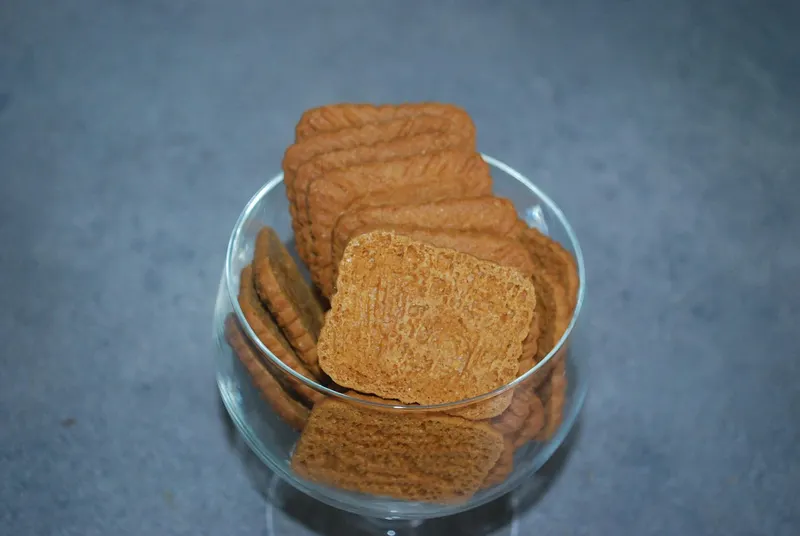
Speculaas are spiced shortcrust cookies that are especially popular during Sinterklaas celebrations in early December. Made with a blend of cinnamon, nutmeg, cloves, and ginger, they have a distinct warm and aromatic flavor. Traditionally, they are pressed into decorative molds depicting windmills, Sinterklaas, or other festive shapes. The slightly crunchy texture and rich spices make them a perfect companion to coffee or tea. During Sinterklaas celebrations (around 5th of December) we also have a special variant called kruidnootjes, these are like small pieces of speculaas like nuts. They are addicting!
17. Boterkoek
Boterkoek, or butter cake, is a dense and rich Dutch pastry that lives up to its name. Made primarily from butter, sugar, and flour, this indulgent treat has a soft yet slightly crumbly texture with a deliciously buttery taste. It’s often baked in a round tin and cut into small squares or wedges. A golden, slightly caramelized top gives it an irresistible crunch.
18. Patat met mayo (or Patat oorlog)
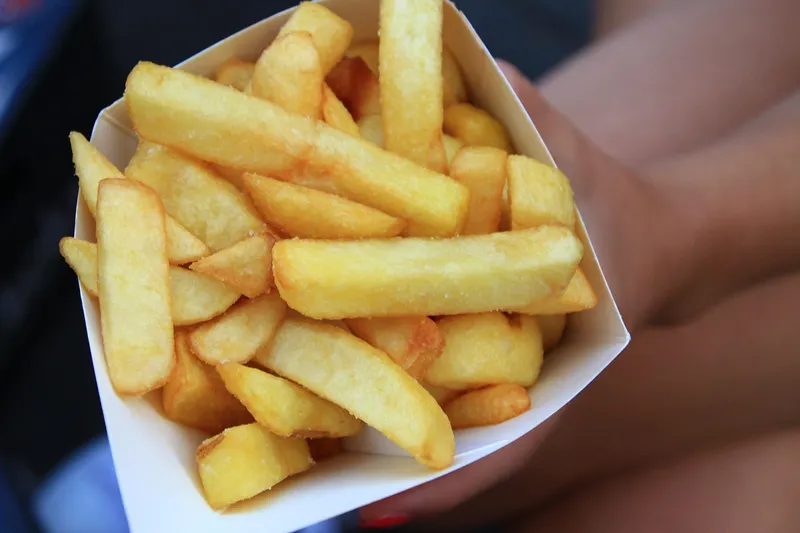
The Dutch take their fries seriously, and “patat met mayo” is the go-to snack for many. Unlike thinner American fries, Dutch fries are thick-cut and crispy on the outside while fluffy on the inside. They are traditionally served with a generous dollop of mayonnaise. If you want something more adventurous, try “patat oorlog” (literally “war fries”), which includes peanut satay sauce (pindasaus), mayonnaise, and chopped onions an unexpected but addictive combination. Great as a hangover dish but you can also go for a kapsalon if in dire need.
19. Tompouce (tompoes)
Tompouce is the Dutch version of a mille-feuille, featuring two layers of crisp puff pastry filled with thick vanilla custard and topped with a smooth layer of pink (or orange on special occasions such as Kingsday) icing. The contrast between the flaky pastry and the creamy filling makes every bite a challenge most people either try to cut it carefully or embrace the inevitable messy experience! The store Hema is famous for their tompouces.
20. Frikandel speciaal
A true Dutch fast-food classic, the frikandel is a skinless, deep-fried sausage made from a blend of meats, including chicken, pork, or beef. The “speciaal” version is sliced open and topped with mayonnaise, curry ketchup, and chopped onions. While it might not be the prettiest snack, it’s a favorite in snack bars across the Netherlands and a must-try for anyone looking to experience authentic Dutch fast food.
Regional Dutch foods
The latter Dutch dishes are available all around the Netherlands, you won’t have a hard time finding any of them. But the following dishes are more local cuisine and you won’t find them everywhere. Be sure to try them out when you are in the region or city of their origin!
21. Limburgse vlaai (Limburg)
A trip to Limburg isn’t complete without tasting Limburgse vlaai, a delicious regional pie with a thin, yeasted dough and a variety of fillings. Popular flavors include cherry, apricot, rice pudding (rijstevlaai), and crumble (kruimelvlaai). Unlike other pies, Limburgse vlaai is light, not overly sweet, and often enjoyed with coffee as part of the beloved Dutch tradition of “koffietijd.” Maastricht, Venlo and Roermond are famous for their vlaaien. I like the appelkruimel or the plain cherry one.
22. Haagse hopjes (The Hague)
These caramel-coffee candies originated in The Hague and have a fun backstory. Legend has it that Baron Hendrik Hop, who loved coffee, was advised by his doctor to stop drinking it. Instead, he had caramelized coffee candies made thus, Haagse hopjes were born! They have a strong coffee flavor with hints of butter and caramel, making them a favorite among Dutch candy lovers.
23. Brabantse worstenbroodje (Brabant)
A Brabantse worstenbroodje is a soft bread roll filled with a spiced sausage, baked to golden perfection. Unlike other Dutch meat snacks like frikandel, these are not deep-fried but baked, making them a staple in Brabant bakeries. They’re especially popular around Christmas and Carnival but enjoyed year-round as a quick bite.
24. Drentse kniepertjes (Drenthe)
Drentse kniepertjes are thin, crispy waffles, similar to stroopwafels but without the caramel filling. These rolled or flat cookies are traditionally eaten around New Year’s, with the flat ones symbolizing the old year (open and known), while the rolled ones represent the new year (still unfolding).
25. Groninger eierbal (Groningen)
This northern Dutch specialty is the Dutch version of a Scotch egg. The Groninger eierbal consists of a whole boiled egg covered in a thick, seasoned ragout, which is then breaded and deep-fried. Crispy on the outside and creamy on the inside, it’s a popular snack in Groningen and a must-try for food adventurers.
26. Zeeuwse bolus (Zeeland)
The Zeeuwse bolus is a sweet, sticky cinnamon roll-like pastry from the coastal province of Zeeland. Made from soft dough coated in dark brown sugar and cinnamon, it’s twisted into a spiral shape and often served with butter. This deliciously sweet pastry has Jewish roots and is a Zeeland tradition. You will find them in Domburg or Veere or other cities in Zeeland.
27. Fries suikerbrood (Friesland)
This Frisian delicacy, meaning “sugar bread,” is a rich, soft bread generously filled with large sugar chunks and cinnamon. When baked, the sugar caramelizes, creating a slightly crunchy, sweet crust. Traditionally given to new mothers as a gift, Fries suikerbrood is perfect with a cup of tea or coffee. Eat them during your trip in Sneek or Leeuwarden.
28. Arnhemse meisjes (Arnhem)
These thin, oval-shaped cookies from Arnhem are made from puff pastry, coated in sugar, and baked until caramelized and crisp. Despite their simplicity, Arnhemse meisjes have a delicate sweetness and a wonderfully flaky texture that makes them a perfect treat.
29. Bossche bol (Den Bosch)
Imagine a giant profiterole filled with whipped cream and coated in a thick layer of glossy dark chocolate that’s a Bossche bol! Originating from ‘s-Hertogenbosch, this decadent pastry is best enjoyed fresh from a local bakery. Eating one without making a mess is nearly impossible, but that’s part of the fun!
30. Uitsmijter (Nationwide, but popular in Amsterdam)
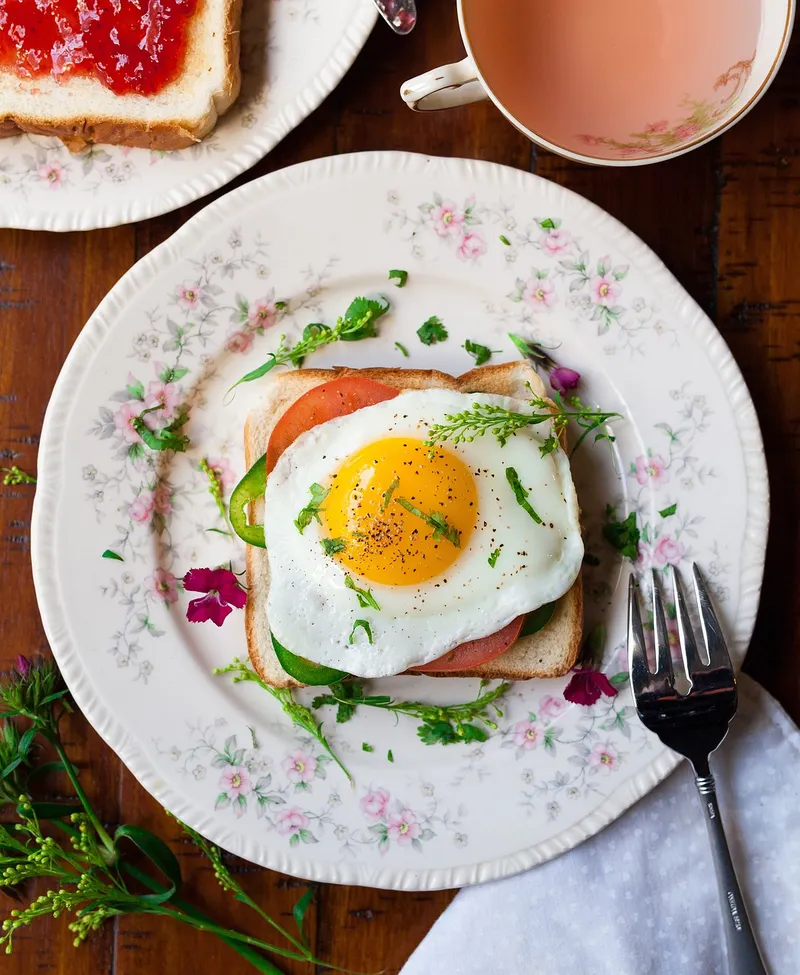
Uitsmijter is the Dutch answer to a hearty breakfast. It consists of slices of bread topped with ham, cheese, and fried eggs, often served with pickles or salad. The name “uitsmijter” (meaning “bouncer”) supposedly comes from its popularity as a late-night or early-morning meal perfect for kicking people out of cafes! You can eat it everywhere in Amsterdam!
31. Gelderse rookworst (Gelderland)

This smoked sausage is one of the most famous Dutch meats, commonly associated with Erwtensoep (split pea soup). Made with pork and spices, Gelderse rookworst has a rich, smoky flavor and a juicy bite. Unlike mass-produced versions, traditional butcher-made rookworst has a natural casing for extra crispiness. Culemborg or Tiel are famous for it.
32. Haringbroodje (Rotterdam)
While Hollandse Nieuwe haring is famous across the Netherlands, the people of Rotterdam prefer it as a haringbroodje served in a soft bun with onions and pickles. It’s a convenient way to enjoy this Dutch specialty, making it a popular snack at fish stalls.
33. Brabantse suikerwafel (Brabant)
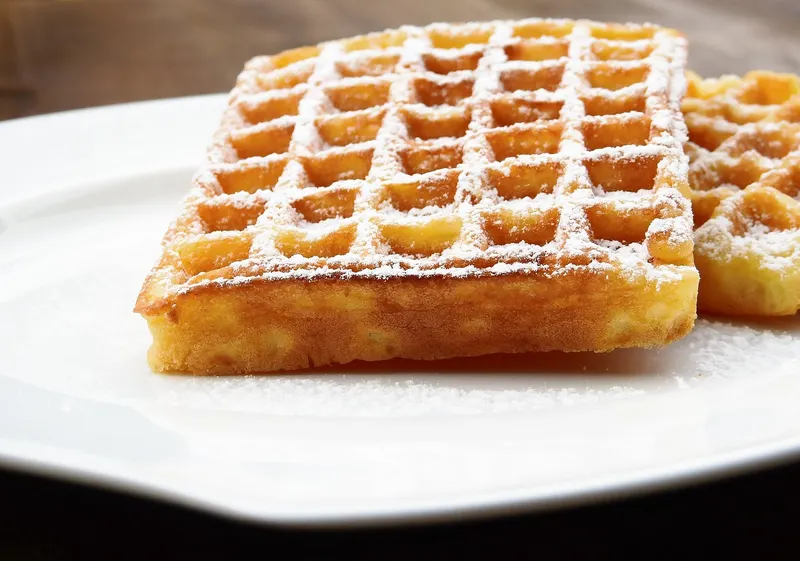
Brabantse suikerwafels are thick, buttery waffles made with yeast and filled with pearl sugar that caramelizes when baked. Unlike stroopwafels, they are crunchy on the outside but soft inside, perfect for eating warm with a dusting of powdered sugar.
34. Hete bliksem (Nationwide, but popular in the North)
The name “hete bliksem” (meaning “hot lightning”) refers to this dish’s ability to stay hot for a long time. It’s a mashed potato dish with sweet and sour apples, creating a unique blend of flavors. Traditionally served with rookworst or bacon, it’s a warming winter meal.
35. Amsterdamse osseworst (Amsterdam)
This raw, smoked beef sausage originates from Amsterdam and is seasoned with spices like nutmeg and black pepper. Unlike other sausages, osseworst is cold-smoked and eaten raw, similar to steak tartare. It’s a delicious snack with mustard or as a topping for sandwiches.
36. Kruidnoten (Nationwide, but especially in the Randstad)
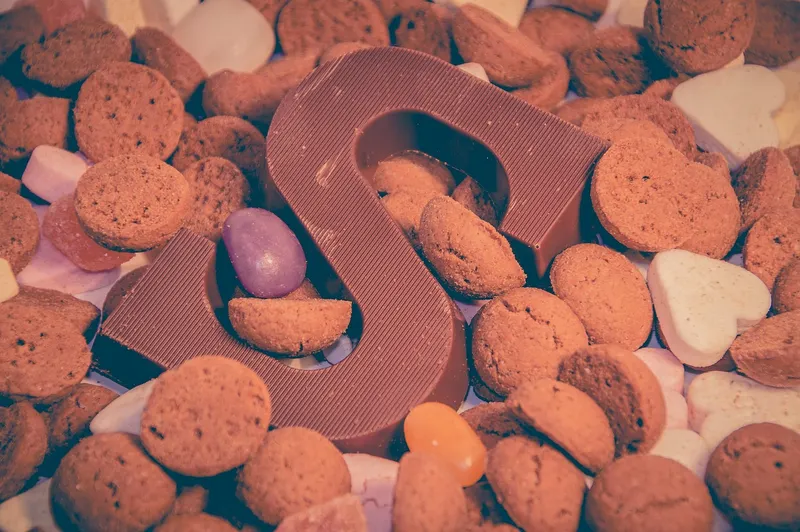
Kruidnoten are small, spiced cookies traditionally eaten during Sinterklaas. Made with the same spice mix as speculaas, they are crunchy, bite-sized, and highly addictive. Around December, you’ll find them everywhere in the Netherlands, often covered in chocolate.
37. Zwolse balletjes (Zwolle)
These hard candies from Zwolle have been made for over a century using a secret recipe. Available in different flavors, Zwolse balletjes are a nostalgic treat that many Dutch people associate with childhood visits to the old-fashioned candy store.
38. Pepernoten (Nationwide)
Often confused with kruidnoten, pepernoten are irregularly shaped, chewy cookies with a strong anise flavor. They are a traditional Sinterklaas treat and date back to the 16th century. Their softer texture and spiced flavor make them different from the crunchier kruidnoten.
39. Drentse turf (Drenthe)
Drentse turf is a cake-like pastry that resembles a piece of turf (peat), a nod to Drenthe’s history of peat extraction. Made with ingredients like brown sugar and spices, this rich treat is a local favorite.
40. Groningen’s mosterdsoep (Groningen)
This mustard soup from Groningen is a creamy, slightly tangy soup made with coarse mustard, leeks, onions, and often bacon. The mustard gives it a unique sharpness, balanced by cream. It’s best enjoyed with a slice of rustic bread.
41. Moorkop (Nationwide, but mainly in the south)
Similar to the Bossche bol, the moorkop is a choux pastry filled with whipped cream and covered in a glossy chocolate glaze. It’s slightly smaller and often topped with a dollop of cream and a piece of fruit. A delicious pastry that you’ll find in bakeries across the country.
42. Fries suikerlatte (Friesland)
A lesser-known Frisian treat, suikerlatte is a sugar-coated breadstick that pairs perfectly with coffee. It has a slight crunch on the outside and a soft, fluffy interior.
43. Amsterdamse ui (Amsterdam)
These pickled yellow onions have a sweet and slightly tangy flavor. Unlike normal pickled onions, they are bright yellow, thanks to a marinade containing turmeric and mustard seeds. They’re often eaten alongside Dutch herring or as a snack.
44. Riefkoek (Twente & Achterhoek)
A savory potato pancake, riefkoek is a specialty from the eastern Netherlands. Made with grated potatoes, onions, and a bit of flour, they are pan-fried to a crispy golden brown. Traditionally served with apple sauce or bacon. You can get a great riefkoek in Almelo or Enschede.
45. Utrechtse vockingworst (Utrecht)
This is a unique semi-dried, smoked sausage that has been produced in Utrecht for over 100 years. Unlike rookworst, it’s not heavily spiced, making it a more subtle but still flavorful meat snack. Best enjoyed with mustard and dark bread.
46. Goudse kaaswafels (Gouda)
Cheese lovers will appreciate Goudse kaaswafels, crispy cheese biscuits made with real Gouda cheese. These savory snacks are buttery, cheesy, and flaky, making them the perfect snack to accompany a Dutch beer.
47. Blote billetjes in het gras (from the north)
This amusingly named dish translates to “bare buttocks in the grass”, referring to the white beans (bare buttocks) mixed into a bed of green peas (grass). Sometimes carrots or potatoes are added for extra flavor.
48. Zeeuws spek (Zeeland)
A deliciously spiced and slow-roasted pork belly, Zeeuws spek (katenspek) is known for its rich smoky flavor. It’s commonly eaten as a snack, in sandwiches, or even on stamppot for extra depth of flavor.
49. Hengelose krentenwegge (Twente & Overijssel)
A traditional fruit bread filled with raisins and currants, krentenwegge is often baked extra-long (sometimes up to a meter long!) and is traditionally gifted to new parents to celebrate the birth of a child.
50. Brabantse eierkoek (Brabant)
Soft, slightly spongy, and mildly sweet, the Brabantse eierkoek is a light and airy egg cake often enjoyed as a quick breakfast or snack. It pairs well with a bit of butter or jam.
51. Gerookte paling (Nationwide, but especially in Friesland and Volendam)
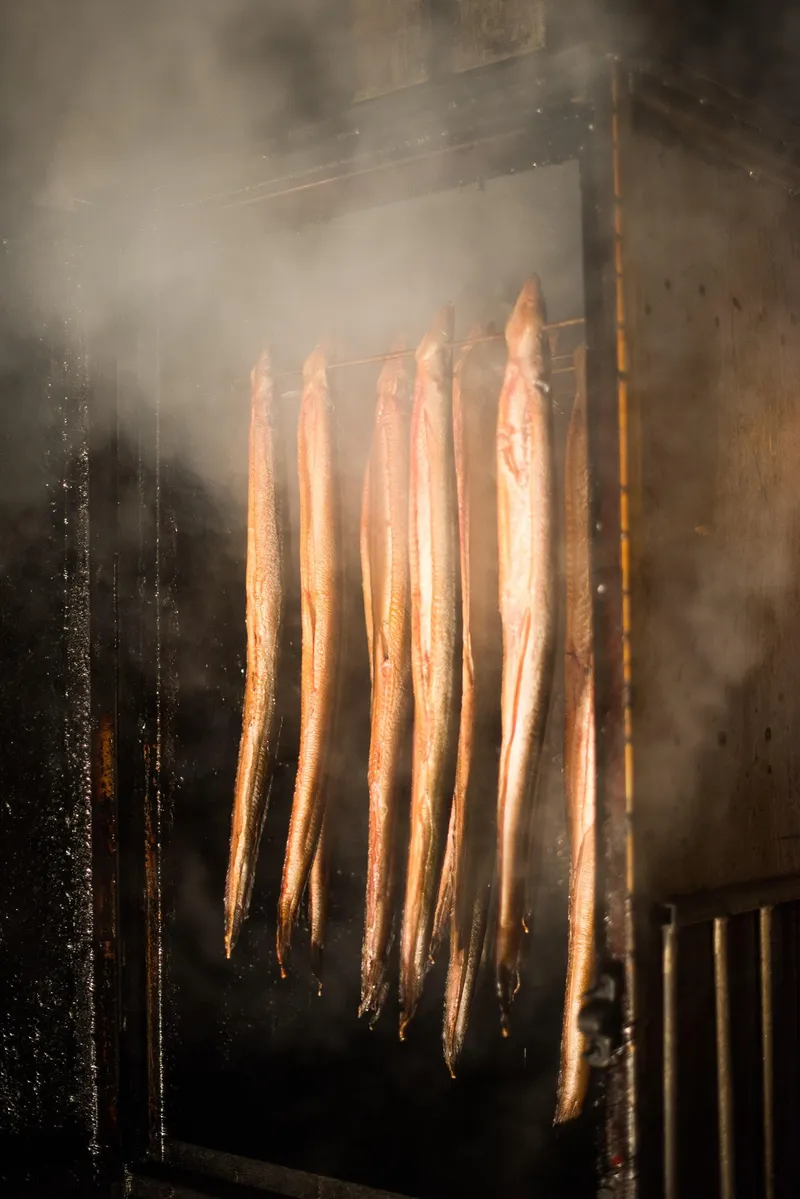
Gerookte paling, or smoked eel, is a rich and flavorful fish delicacy that has been enjoyed in the Netherlands for centuries. Traditionally caught in Dutch lakes and coastal waters, the eel is salted and slowly smoked over oak or beech wood, giving it a deep, smoky aroma. It’s commonly eaten on its own, filleted and served on white bread, or as part of a Dutch seafood platter. The fishing villages of Volendam and Harderwijk are famous for their high-quality smoked eel, making it a must-try for seafood lovers.
Some colonial Dutch food dishes and delicacies
We might not always be proud on our past as Dutch explorers and conquerers but it resulted in some very nice additions to our cuisine. Here are some dishes served everywhere in the country. Just ask for your local guide for the best places to eat these.
52. Rijsttafel (Indonesian-Dutch)
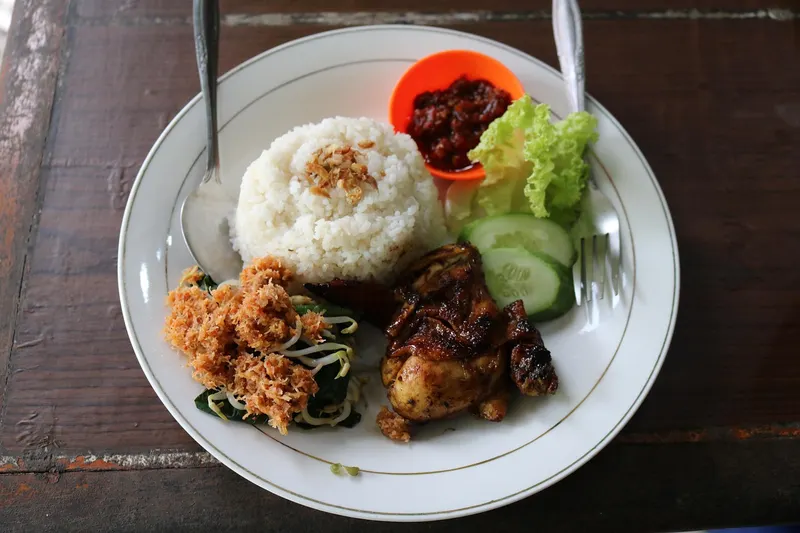
Rijsttafel, meaning “rice table”, is a Dutch adaptation of Indonesian dining culture. It consists of small portions of various Indonesian dishes, served with rice. The meal can include satay, rendang (slow-cooked beef), gado gado (vegetables with peanut sauce), sambal goreng (spicy fried vegetables), and more. It was introduced to the Netherlands during the colonial era and remains a popular way to enjoy Indonesian flavors in a feast-like experience.
53. Pindasaus (Indonesian-Dutch)
One of the most famous Indonesian dishes in the Netherlands, satay consists of grilled skewered meat (often chicken or pork) served with thick, creamy peanut sauce. It is commonly found in Indonesian restaurants, Dutch snack bars (pindasaus), and even served with fries (patat satay).
54. Babi pangang (Indonesian-Chinese-Dutch)
A unique dish found in Dutch-Chinese restaurants, babi pangang is crispy roasted pork covered in a sweet and sour tomato-based sauce. It’s served with white rice or fries and has become a staple “Chinese” dish in the Netherlands, though its origins trace back to Indonesia.
55. Nasi goreng (Indonesian-Dutch)
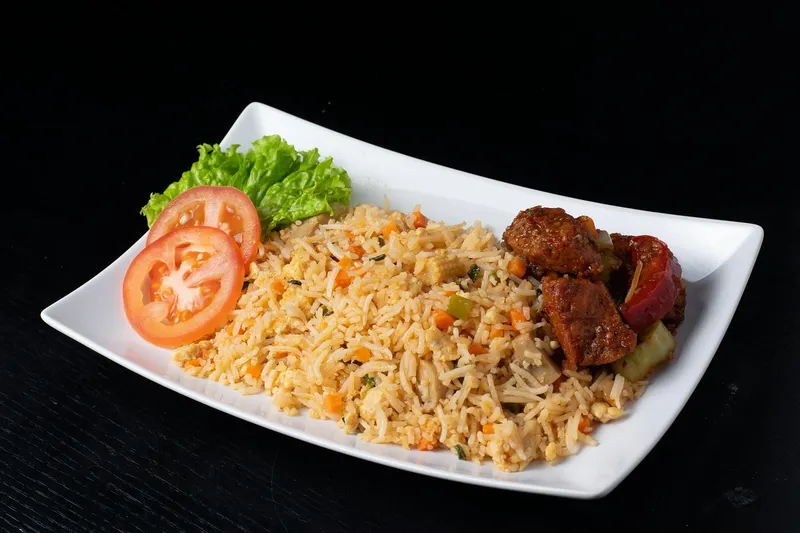
This Indonesian fried rice dish is a favorite in the Netherlands, often served with satay, fried eggs, pickled vegetables (atjar), and shrimp crackers (krupuk). Many Dutch households prepare it at home using ready-made spice mixes, and it’s also a popular item in Indonesian takeaway spots.
56. Sotosoep (Indonesian-Dutch)
A fragrant chicken soup with turmeric, lemongrass, and coconut milk, sotosoep is a comforting and flavorful dish. It’s topped with hard-boiled eggs, bean sprouts, and fried onions, often served with rice on the side. Many Dutch-Indonesian families consider it the ultimate homemade comfort food.
57. Roti (Surinamese-Dutch)
Surinamese cuisine has had a major impact on Dutch food culture, and roti is one of its most famous dishes. It consists of flatbread served with curried chicken (masala kip), potatoes, long beans, and a boiled egg. The best way to eat it? Tear off pieces of the flatbread and use them to scoop up the curry! For takeaway I’m always taking a rotiroll!
58. Pom (Surinamese-Dutch)
Pom is a unique Surinamese oven-baked dish made from tayer root (a tropical vegetable similar to cassava), mixed with spiced chicken and citrus juice. It has a slightly sweet, tangy, and savory taste and is often eaten at celebrations and family gatherings.
59. Bara (Surinamese-Dutch)
This deep-fried lentil dough snack originates from the Indian-Surinamese community. Made with black lentils, garlic, and cumin, it has a crispy exterior and a soft, slightly chewy center. Bara is typically served with spicy chutneys or masala dipping sauce and is commonly found at Surinamese bakeries and street food stalls.
60. Saoto soep (Surinamese-Dutch)
Though similar to sotosoep, Surinamese saoto soep has its own distinct twist. This Javanese-Surinamese chicken soup is flavored with ginger, lemongrass, and soy sauce, then served with rice, bean sprouts, hard-boiled eggs, and crispy fried potatoes.
61. Kapsalon (Turkish-Dutch)
This iconic Dutch-Turkish fast food dish was invented in Rotterdam and has gained a cult following. A kapsalon consists of a base of fries, topped with doner kebab or shawarma, covered in melted cheese, and finished with lettuce, garlic sauce, and sambal (spicy chili sauce). It’s the ultimate late-night snack and one of the most famous Dutch street foods.
62. Döner kebab (Turkish-Dutch)
Although originally Turkish, döner kebab has become a staple fast food in the Netherlands. You’ll find countless kebab shops serving thinly sliced, spiced lamb, chicken, or beef stuffed into pita bread or wraps, topped with lettuce, garlic sauce, and sambal. It’s a go-to for a quick lunch or a post-night-out meal.
63. Shawarma (Middle Eastern-Dutch)
Similar to döner but slightly different in seasoning, shawarma is another popular choice at Dutch kebab shops. It’s often served with pita bread, garlic sauce, and fresh salad, or as a loaded plate with fries. Dutch shawarma is sometimes made with a mix of lamb and chicken, catering to local taste preferences.
64. Lahmacun (Turkish pizza, popular in the Netherlands)
Lahmacun, sometimes called Turkse pizza in the Netherlands, is a thin, crispy flatbread topped with spiced minced meat, tomatoes, and onions. It’s often rolled up with salad, garlic sauce, and sambal for a delicious on-the-go meal. Many kebab shops sell it as a cheaper alternative to a döner wrap.
65. Falafel (Middle Eastern-Vegan Dutch)
Falafel has become a beloved vegetarian/vegan street food in the Netherlands. These crispy chickpea balls, often served in a pita with hummus, garlic sauce, and pickled veggies, are especially popular in cities with a high student population. Amsterdam is home to some fantastic falafel spots!
66. Borek (Turkish-Dutch)
Borek is a savory pastry made with filo dough, filled with cheese, spinach, or minced meat. It’s a common breakfast or lunch item at Turkish bakeries in the Netherlands and pairs perfectly with a cup of Turkish tea.
67. Witte asperges (The White Gold – Limburg & Brabant)
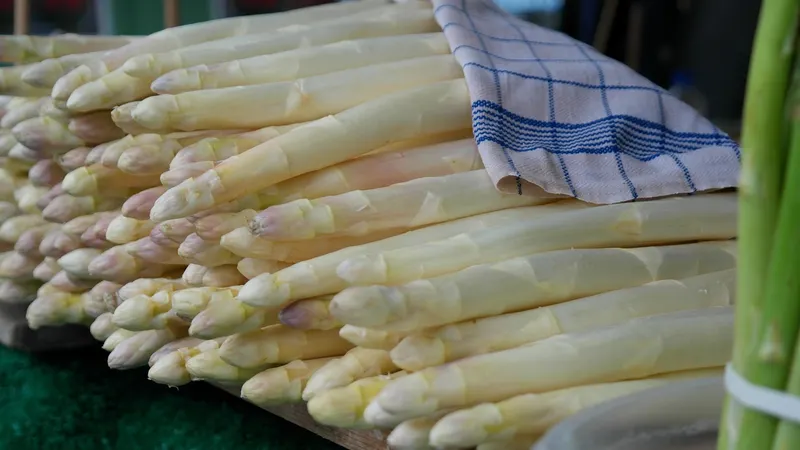
Known as “het witte goud” (the white gold), white asparagus is one of the most prized seasonal delicacies in the Netherlands, especially in Limburg and Brabant. Unlike green asparagus, these spears are grown underground, preventing them from turning green due to lack of sunlight. The result? A mild, tender, and slightly sweet vegetable that’s only available from mid-April to late June. I love these, they are the absolute best! Also for making soup.
68. Drop
My absolute go to candy is drop. Drop, or Dutch licorice, is a national obsession in the Netherlands, with the Dutch consuming more licorice per capita than any other country. Unlike the sweet licorice found elsewhere, Dutch drop comes in a variety of flavors, ranging from mildly sweet to intensely salty. The most famous types include zoute drop (salty licorice), dubbelzoute drop (double-salted licorice), and honingdrop (honey licorice). Its unique taste often surprises foreigners, as some versions contain ammonium chloride, giving it an unexpectedly sharp and salty flavor. Available in supermarkets, candy stores, and even pharmacies as a throat soother, drop is a staple of Dutch culture though definitely an acquired taste for many!
69. Beschuit met muisjes
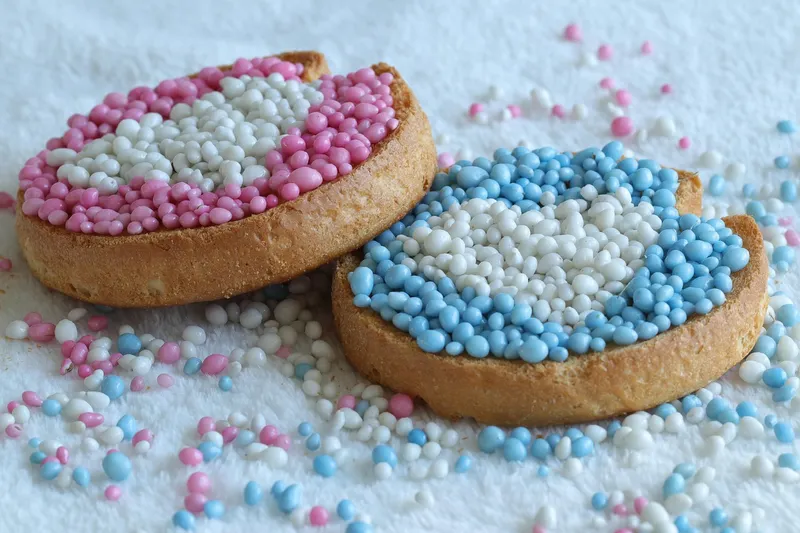
Beschuit met muisjes is a traditional treat served to celebrate the birth of a baby in the Netherlands. It consists of crispy, round rusks (beschuit) spread with butter and topped with anise-flavored sugar sprinkles, known as muisjes. These tiny sprinkles come in pink and white for girls and blue and white for boys, making them an essential part of Dutch birth celebrations. The tradition dates back to the 17th century and is still widely practiced today. The aniseed in muisjes is also believed to have medicinal properties, including stimulating milk production for new mothers. Whether enjoyed at home or served to visitors in hospitals, beschuit met muisjes remains one of the most endearing Dutch food traditions.
70. Spekkoek
Spekkoek is a rich, multi-layered Indonesian-Dutch cake that has become a beloved treat in the Netherlands. Despite its name meaning “bacon cake” there is no bacon in it; the name comes from its resemblance to layered bacon strips. This indulgent cake is made by baking thin layers of spiced batter one at a time, creating a beautifully striped effect. It is flavored with cardamom, cinnamon, nutmeg, and cloves, giving it a deep, aromatic taste. Due to its labor-intensive preparation, spekkoek is often reserved for special occasions, such as holidays or family gatherings. Traditionally enjoyed in small slices with coffee or tea, this cake is a must-try for anyone interested in the Indonesian influence on Dutch cuisine.
Our tourguides always get these questions from travellers
What is the #1 must-try dish from the Netherlands?
Bitterballen, fresh herring, stroopwafels and stamppot in the winter. These dishes are unique and cultural
What is the most traditional Dutch dish?
The Netherlands is best known for stamppot, a hearty winter dish of mashed potatoes mixed with vegetables like kale (boerenkool), sauerkraut, or carrots and onions (hutspot). It’s often served with smoked sausage (rookworst), making it a true comfort meal.
Why do the Dutch eat so much cheese?
Cheese is deeply rooted in Dutch history, dating back to Roman times. The country’s flat, grassy fields are ideal for dairy farming, and centuries of expertise made Gouda, Edam, and Leerdammer world-famous. Today, cheese is enjoyed daily on bread and proudly sold at traditional cheese markets in towns like Alkmaar and Gouda.
Are Dutch pancakes different from American pancakes?
Yes, very much so. Dutch pancakes (pannenkoeken) are thin, large, and often as big as a dinner plate. They can be sweet (with syrup, powdered sugar, or fruit) or savory (with bacon, cheese, or vegetables). There are also poffertjes, small fluffy pancakes often served with butter and sugar, beloved at fairs and winter markets.
Do the Dutch really eat raw herring?
They do, and it’s a delicacy! Raw herring (haring) is lightly cured, not completely raw, and usually eaten by holding the fish by its tail and letting it slide into your mouth. It’s often paired with onions and pickles. The start of the herring season in June is even celebrated with festivals.
Why do the Dutch love licorice so much?
The Netherlands is the world’s largest consumer of licorice (drop), with over 30,000 kilos eaten every year. Licorice comes in countless varieties: sweet, salty, hard, or soft. The salty versions can surprise foreigners, but for the Dutch it’s pure nostalgia.
What is a typical Dutch breakfast?
Breakfast is usually simple but filling: slices of bread with cheese, cold cuts, or the famous hagelslag (chocolate sprinkles). Many also enjoy yogurt or kwark with fruit and muesli. Coffee is almost always part of the morning ritual.
Is Dutch food only heavy and hearty?
Not at all. While stamppot and fried snacks are iconic, Dutch cuisine also includes lighter meals like fresh fish, seasonal vegetables, and hearty soups. Thanks to colonial history and global trade, Indonesian food such as rijsttafel (rice table) has also become part of the Dutch food identity.
What is your favorite Dutch food?
With this list of 70 iconic Dutch dishes, you now have a complete culinary roadmap to explore the Netherlands like a true local. From crispy bitterballen in an Amsterdam pub to a sweet Zeeuwse bolus by the coast, each dish tells a story of Dutch tradition, innovation, and love for good food. Whether you’re a traveler, expat, or student, tasting these specialties will give you a deeper connection to Dutch culture one bite at a time. So next time you’re in the Netherlands, skip the generic tourist food / international cuisine and dive into the real flavors of the Lowlands. Eet smakelijk!